An educational article with references listed below.
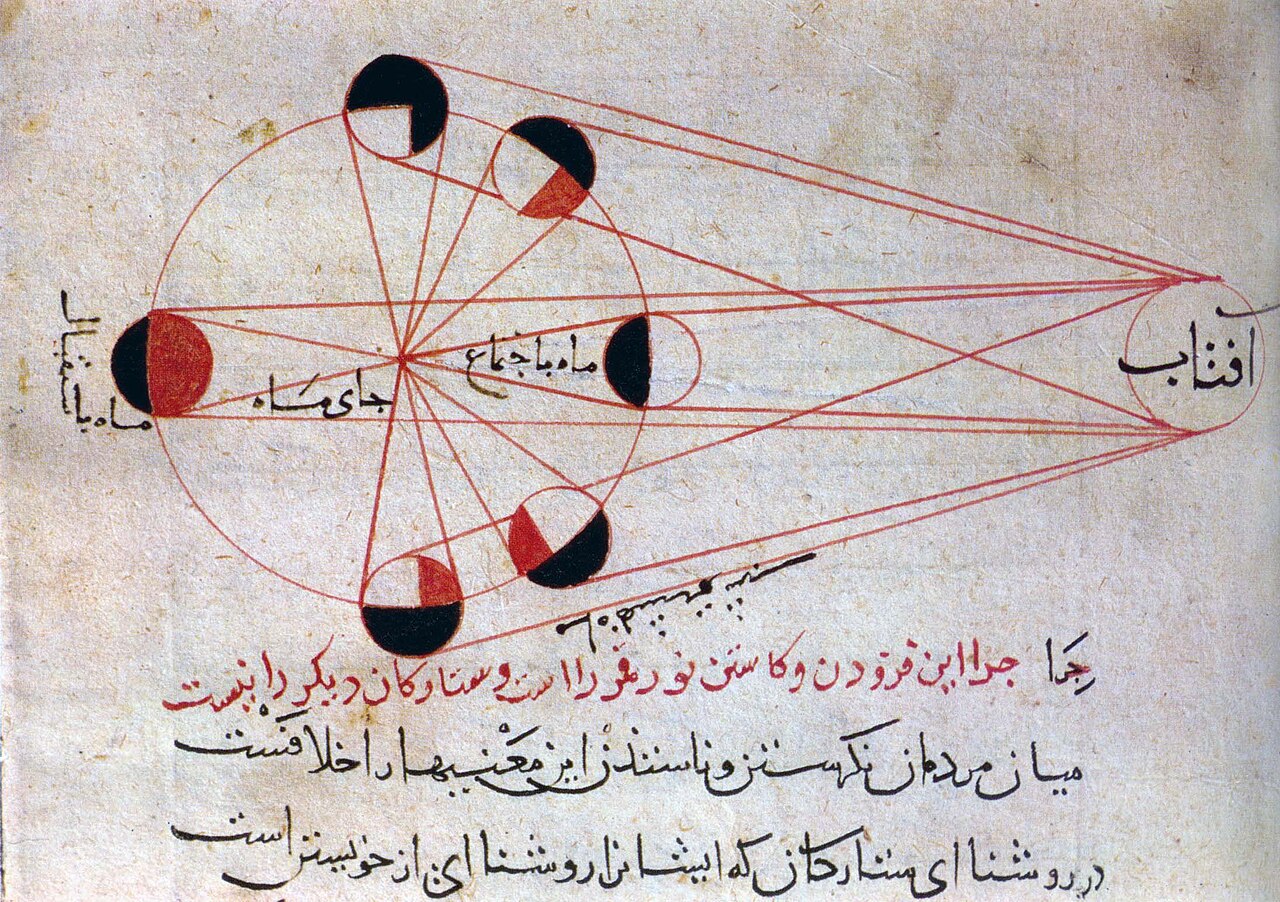
The moonlight we see is reflected sunlight. At any given moment, the Sun illuminates half of the Moon, while the other half is in darkness. However, the illuminated portion we can see changes as the Moon travels around Earth.
The explanation
When the Moon is between Earth and the Sun, its illuminated side faces away from us. This phase is called the new moon and is usually not visible from Earth. As the Moon continues along its orbit, a small part of its sunlit surface gradually becomes visible as a crescent. The visible bright portion then grows through the first quarter and waxing gibbous phases.
At full moon, the Moon is on the opposite side of Earth from the Sun. Its daytime side faces us, so almost all of the surface we can see appears bright. Afterwards, the visible illuminated portion shrinks through the waning gibbous, last quarter, and waning crescent phases before the cycle begins again.
NASA explains that the complete sequence consists of eight phases: new moon, waxing crescent, first quarter, waxing gibbous, full moon, waning gibbous, last quarter, and waning crescent. The cycle from one new moon to the next lasts about 29.5 days.
The Moon's phases are not caused by Earth's shadow. Earth's shadow covers the Moon only during a lunar eclipse. In the regular cycle, the apparent changes in shape occur because our viewing angle towards the Moon's sunlit portion changes throughout its orbit. The Moon does not actually change shape or lose its light; what changes is how much of its illuminated side is visible from Earth. This pattern can be observed month after month.