News and context with references. Check the publication date and source dates.
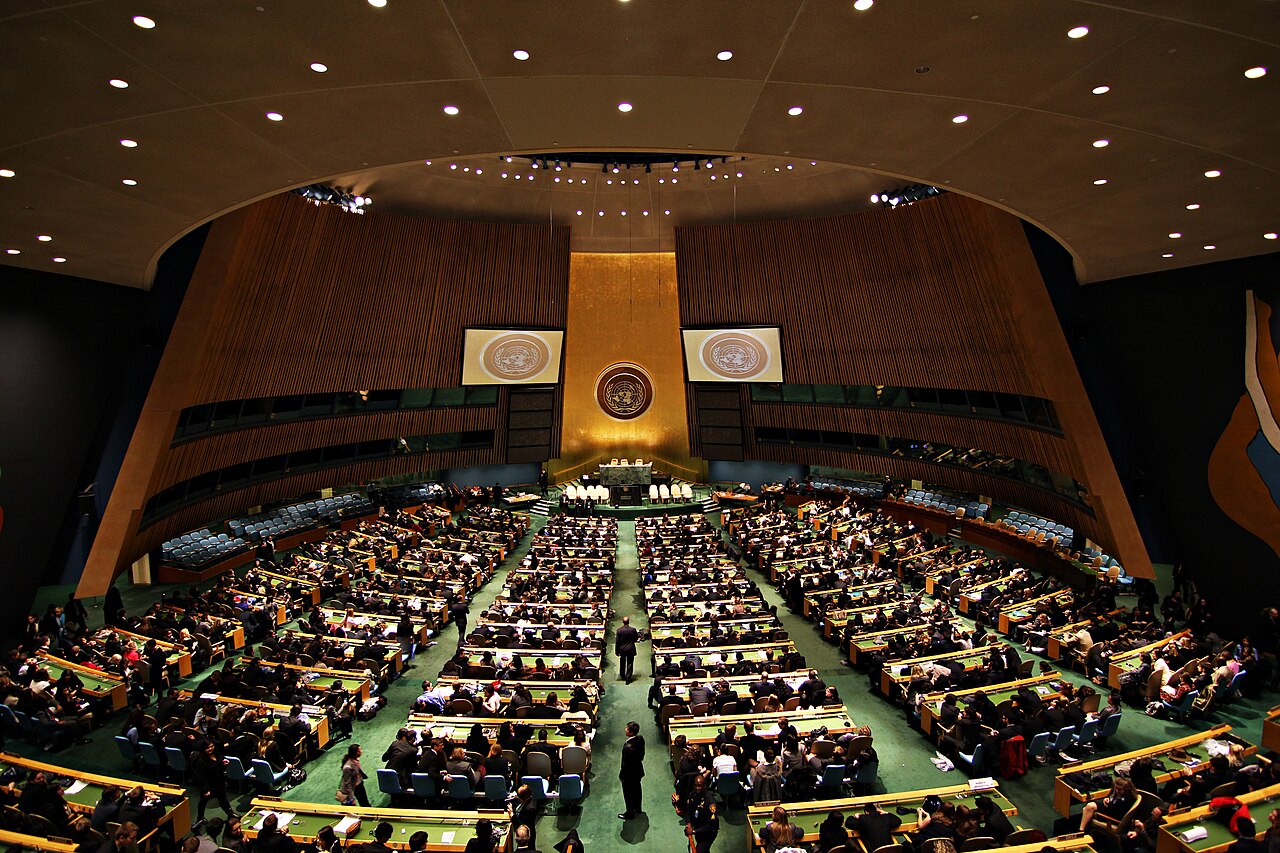
On Wednesday, October 28, 2026, the United Nations General Assembly called for an end to the United States' economic, commercial, and financial embargo against Cuba for the 34th time. According to UN News, the resolution was still adopted, but received its weakest support in two decades. The vote took place as Cuba faced a severe energy crisis that was making life increasingly difficult for people on the island.
Support falls sharply
The resolution submitted by Cuba was approved with 130 votes in favor, 17 against, and 25 abstentions. The result marked a major shift from the previous year, when a similar resolution received 165 votes in favor, seven against, and 12 abstentions.
The annual vote tally has long reflected changes in relations between Washington and Havana. When the General Assembly first considered the resolution in 1992, 59 countries voted in favor, three against, and 71 abstained. Support later peaked at 191 votes in 2015 and 2017, during and after the thaw in relations under President Barack Obama. In 2016, the United States abstained for the first time.
Principles cited by Cuba
The resolution refers to principles of the UN Charter concerning sovereign equality, non-interference in domestic affairs, and freedom of trade and navigation. The text also mentions the United States' 1996 Helms-Burton Act, whose extraterritorial reach is considered to affect companies and individuals in other countries.
The resolution urges countries with similar regulations to repeal them. The document also states that tougher measures imposed since 2017 reversed the easing that took place in 2015 and 2016.
The vote took place amid a severe energy crisis in Cuba. UN News reported that the situation was worsened by the United States' fuel embargo following the transfer of Venezuela's president to New York, making life more difficult for people across Cuba.
United States rejects allegations
United States Ambassador Mike Waltz rejected the premise of the debate and argued that Cuba's problems stemmed from its own government. He said there was no blockade and pointed to the value of United States exports to Cuba, which exceeded 876 million dollars in the first eight months of 2026.
Waltz also cited shipments from Canada, Spain, Mexico, China, Russia, the European Union, and UN agencies. According to him, the country's wealth had not disappeared but had been transferred from ordinary people to the ruling elite. He accused military-run business monopolies of hoarding resources and described opposition to the resolution as a way to prevent a propaganda victory for the Cuban government.
Cuba highlights impact of embargo
Cuban Foreign Minister Bruno Rodríguez Parrilla responded by displaying a counter on a screen estimating the losses caused by the embargo since the debate began on Tuesday. The figure shown had exceeded 22.9 million dollars.
Rodríguez blamed the embargo for pressure on Cuba's healthcare system. He said the infant mortality rate had doubled and tens of thousands of surgeries had been postponed or canceled. According to his statement, cancer medicines could not enter the country, while Cuban-made treatments for Alzheimer's disease and dementia could not be marketed abroad.
He also rejected United States criticism regarding democracy and said Cuba was only demanding to be allowed to live in peace. In his view, Cuba was not a threat, while the embargo was.