News and context with references. Check the publication date and source dates.
Ukraine has begun expanding its military communications technology options after the Starlink network faced restrictions for several days. As reported by detikinet on October 25, 2026, the connection has now returned to normal, but the incident prompted Kyiv to establish partnerships with Nokia and ICEYE.
Connectivity restrictions have been lifted
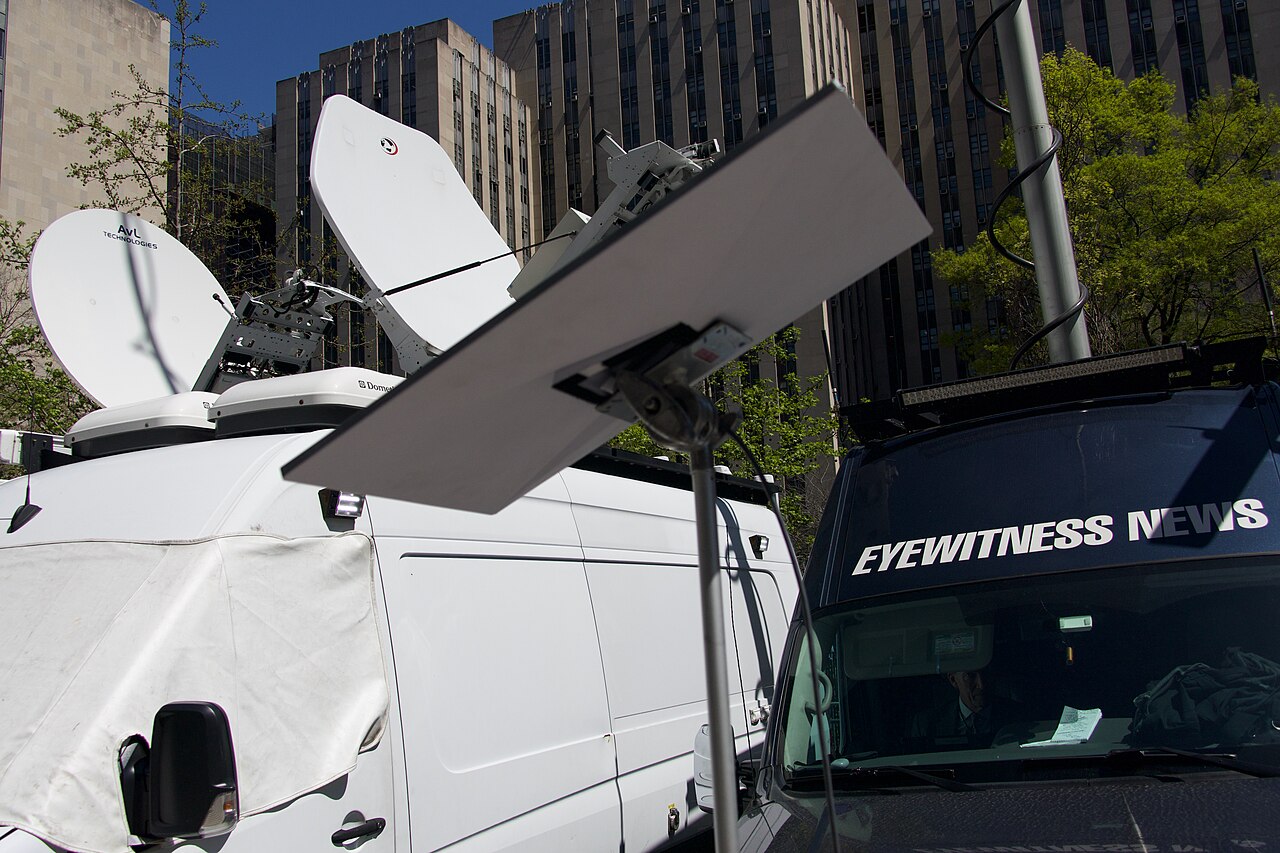
Kyiv has relied on Starlink and its dedicated military version, Starshield, to control drones and support other military operations. Ukraine accused US President Donald Trump of asking Starlink owner Elon Musk to impose restrictions on the network.
The restrictions reportedly caused drones to lose connectivity when traveling at speeds of 161 kilometers per hour or more. Trump initially denied the allegation before later saying that Musk had restored the connection to its previous state. Ukrainian Defense Minister Yevhenii Khmara said the network can now be used at speeds exceeding 400 kilometers per hour, indicating that full capabilities have been restored.
Partnerships with Nokia and ICEYE
Although the service has returned to normal, Ukraine has chosen to seek other options to avoid dependence on a single provider. Ukraine's Ministry of Defense has signed letters of intent to develop new defense and satellite communications capabilities with Finnish technology company Nokia and satellite manufacturer ICEYE.
Ukrainian President Volodymyr Zelenskyy said reliable communications are a matter of national security in modern warfare. He said every country needs capabilities that it can control independently. Zelenskyy also announced a partnership with Norway to develop air defense and communications systems that could serve as alternatives to Starshield.
No equivalent replacement is available yet
Chad Anderson, CEO of venture capital firm Space Capital, estimated that such alternatives may take another two to three years to materialize. However, matching Starlink's scale is expected to take longer because SpaceX has around 11,000 satellites in orbit.
Anderson said Starshield would be even more difficult to replace. He cited Pentagon contract documents describing SpaceX as the only provider capable of meeting certain requirements through 2026. According to Anderson, the main constraint is not capital but launch capacity. Starlink's competitors also continue to use SpaceX's launch services to place their satellites into orbit.
Calls for an investigation and the emergence of competitors
US lawmakers from both parties have called for an official investigation into Musk and SpaceX over allegations of unilateral service changes in Ukraine. Brookings senior fellow Jay Shambaugh said the sudden change could reinforce the perception that the United States is an unreliable ally. He warned that, in the long term, this could affect US exports to the European Union if European countries avoid dependence on services that can be disconnected at any time.
Several Starlink competitors are beginning to expand, including Amazon's Leo, France's Eutelsat, and Blue Origin's planned TeraWave. The European Union is also developing IRIS², a constellation comprising hundreds of satellites, although its first launch is not expected until 2029. According to Anderson's research, since Russia's invasion of Ukraine in February 2022, investors have committed approximately US$8 billion to fund alternatives to Starlink and Starshield. Of that amount, around US$3.9 billion has gone to entities that could potentially compete with Starlink, particularly Spacesail and China SatNet.