News and context with references. Check the publication date and source dates.
Tensions in southern Lebanon rose again in early September 2026, particularly in and around Nabatieh. On 8 September, the UN Secretary-General expressed concern over the escalation of Israeli military operations, civilian casualties, displacement caused by evacuation orders, and reports of strikes affecting hospitals, healthcare workers and public institutions. The statement was the UN’s official assessment on that date, not a real-time report of every development afterward.
The UN appeal amid escalation
The UN Secretary-General called for an immediate cessation of hostilities, urged Israel to withdraw its forces from Lebanese territory, and called on all parties to respect Lebanon’s sovereignty and territorial integrity. He also recalled the obligations of all parties under international law, including the protection of civilians and civilian objects.
UN News, citing the UN spokesperson and humanitarian agencies, reported that around 5,000 families, or 20,000 people, left Nabatieh District in the week before 8 September. The figure came from local authorities and was relayed by OCHA; it should therefore be read as a report for a specific period, not an independent and current count for all of southern Lebanon.
The Blue Line is not an international border
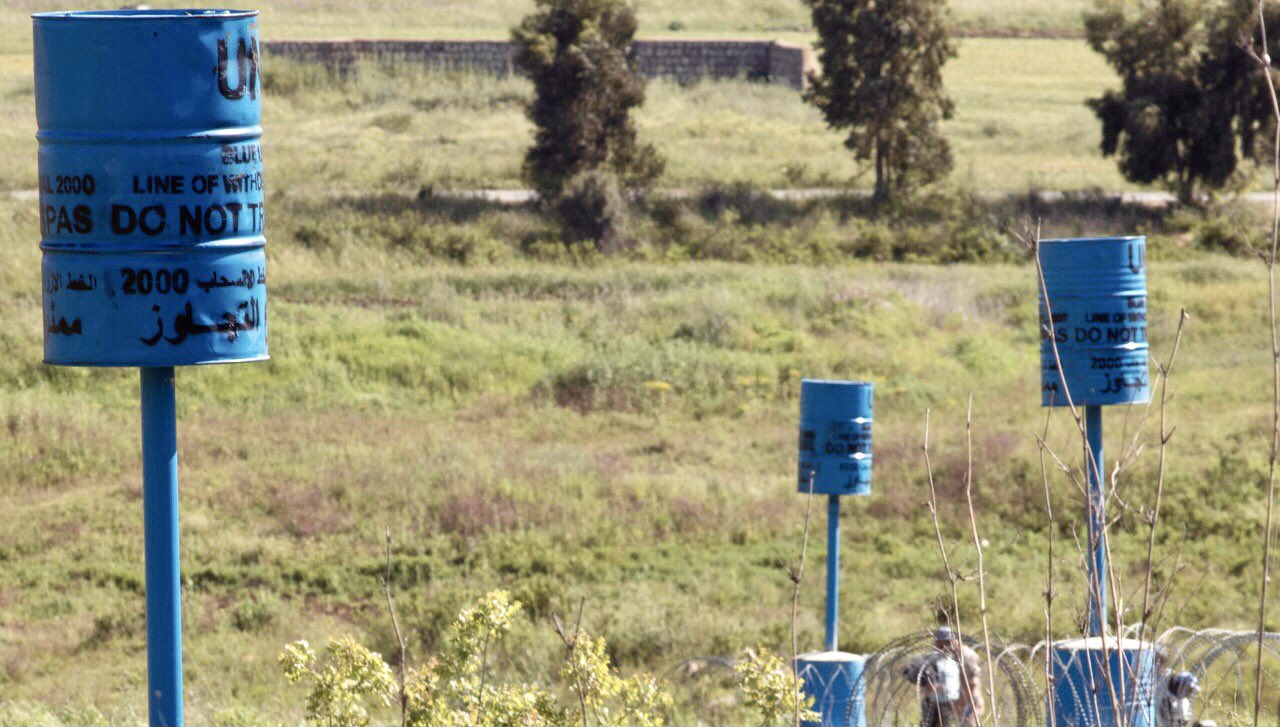
The UN established the Blue Line in 2000 as a line of withdrawal to confirm the departure of Israeli forces from Lebanon. UNIFIL stresses that the roughly 120-kilometre line is not a border agreed by the two countries. It serves as a reference for monitoring violations without determining the shape of any border that may later be agreed through a political and diplomatic process.
Under the framework of Security Council Resolution 1701, Israeli forces must remain south of the Blue Line. In the area between the Blue Line and the Litani River, the resolution also calls for there to be no armed personnel, assets or weapons other than those of the Government of Lebanon and UNIFIL. Implementing the resolution therefore concerns not only the position of Israeli forces, but also the authority of the Lebanese state and the presence of weapons outside its control.
Older context and recent developments must be distinguished
The Secretary-General’s report dated 9 July 2026 covers the period from 21 February to 20 June. It states that Hezbollah attacked Israel on 2 March and that the Israeli military subsequently expanded its operations and ground presence north of the Blue Line. The report also records continuing Hezbollah attacks and Israeli airstrikes, as well as major effects on civilians and peacekeepers. Those findings provide official background, but they must not be presented as a record of events in September.
Developments on 8 September indicate that diplomatic efforts and the cessation-of-hostilities arrangements have not produced stable security. Operational claims or stated reasons for attacks by parties to the conflict must remain attributed to the parties making them. What can be established from the UN sources reviewed is serious concern over the escalation, its humanitarian impact and continuing reported violations of Resolution 1701.
Sources & further reading
- Deeply Concerned by Escalating Israeli Military Operations in Southern Lebanon, Secretary-General Condemns Mounting Civilian Causalities
- UN chief demands Israeli withdrawal from Lebanon amid Nabatieh escalation
- UNIFIL FAQs
- Implementation of Security Council resolution 1701 (2006) during the period from 21 February to 20 June 2026