News and context with references. Check the publication date and source dates.
Humanitarian aid does not travel directly from a donor's warehouse into people's hands. In conflict areas, that journey involves assessing needs, procurement, permissions and access negotiations, inspections, transport, storage, distribution, and monitoring. The explanation below first covers the general mechanisms, then provides specific context about the coordination system used for Gaza without describing current conditions.
Turning needs into an aid plan
The process usually begins with understanding who needs assistance, where they are, and which services have been disrupted. Humanitarian teams gather information together with communities, local organizations, health institutions, and other partners. These findings help set priorities such as food, water, healthcare, shelter, protection, or nutritional support.
OCHA explains that humanitarian access works in two directions: organizations must be able to reach affected communities, and people must be able to obtain services safely. UN assistance is guided by humanity, neutrality, impartiality, and independence. This means aid decisions should be based on need, rather than political support, identity, or recipients' connections to a particular party.
In armed conflict, access is often negotiated with states, local authorities, armed groups, and others controlling territories or routes. Arrangements can cover travel times, convoy routes, checkpoints, movement notifications, or humanitarian pauses. Operational agreements help reduce risk, but do not replace the parties' obligations under international humanitarian law.
The logistics and distribution chain
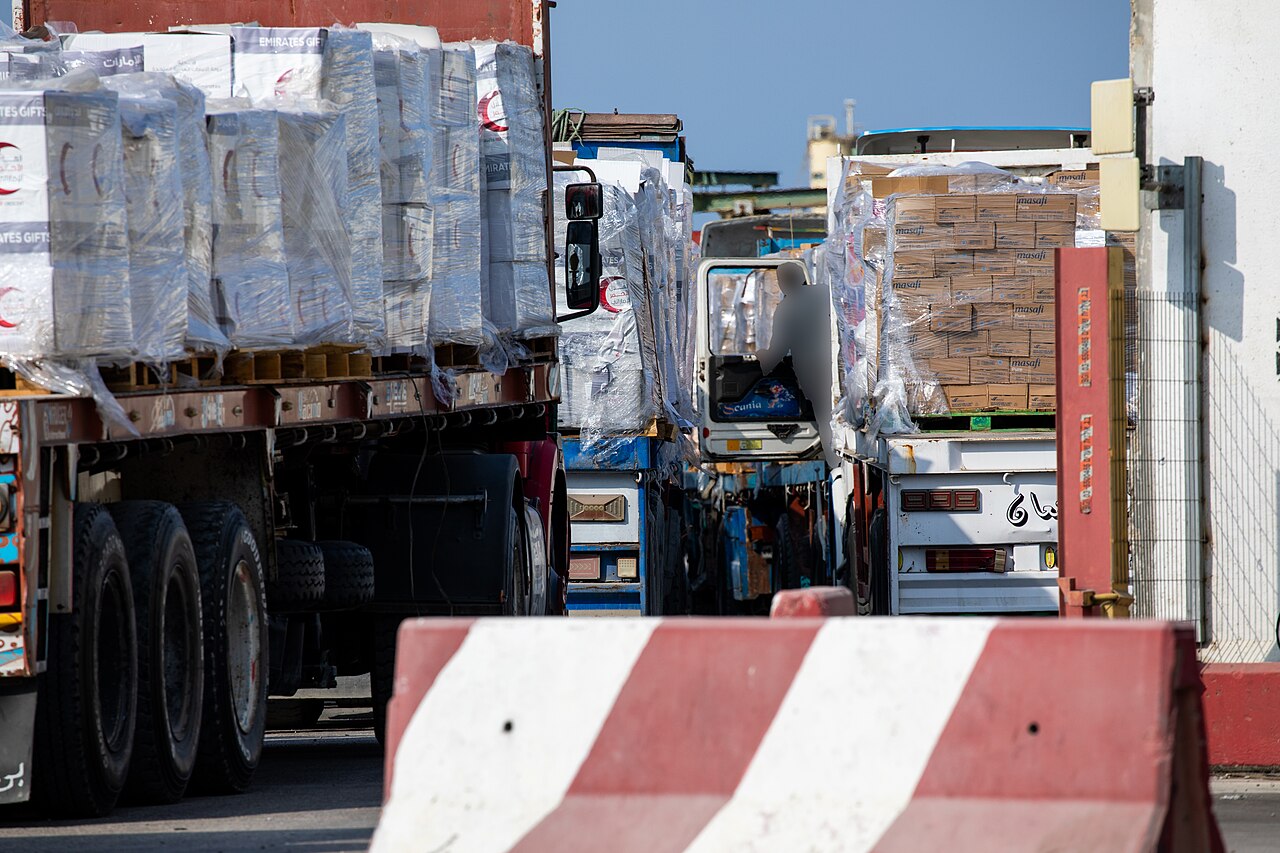
Once needs and entry routes are established, goods are purchased or sent to logistics hubs. Shipping documents are checked, cargo may undergo security inspections, and supplies are moved to warehouses or consolidation facilities. From there, partners working in food, health, water, sanitation, shelter, and protection organize transport to service or distribution points closer to residents.
Recipient lists, referrals from social services, vulnerability assessments, and communication with communities can help reduce duplication and reach people facing mobility barriers. Assistance does not always take the form of packages of goods. Depending on conditions and how markets are functioning, it may include medical services, repairs to water facilities, ready-to-eat meals, protection support, or cash assistance.
Monitoring takes place throughout the chain. Organizations reconcile manifests, record warehouse receipts, oversee distribution, receive community feedback, and investigate discrepancies. The aim is to ensure that aid reaches its civilian destination, address shortcomings, and reduce the risk of loss, diversion, or unfair treatment.
The specific context of Gaza
In Gaza, OCHA for the occupied Palestinian territory coordinates UN agencies, international and Palestinian nongovernmental organizations, and sectoral groups. The cluster structure brings together needs assessments, data, technical standards, planning, monitoring, and contingency plans so that organizations do not work in isolation or duplicate services in the same location.
The UN operational plan for Gaza published by OCHA on 16 May 2025—not a report on current implementation—describes a chain that includes cargo submissions, manifest inspection and verification, receipt at entry points, transport to humanitarian facilities, and last-mile delivery through a network of partners. Monitoring mechanisms can track shipments from registration to facilities, warehouses, or distribution points. Service locations are selected with needs, safety, accessibility, and people with limited mobility in mind.
Gaza's context involves additional coordination because movement through entry points and within the territory requires arrangements with the relevant parties. However, an outline of the process must not be mistaken for a report that a particular route, facility, or volume of aid is currently operating. Access conditions can change, so assessing the current situation requires dated, verified operational data.
Sources & further reading
- Humanitarian Access - OCHA
- Humanitarian Relief Operations in Armed Conflict: IHL Framework - OCHA
- Coordination - OCHA occupied Palestinian territory
- Coordination Structure - OCHA occupied Palestinian territory
- Briefing note: UN-Coordinated Plan to Resume Humanitarian Aid Deliveries to Gaza - OCHA occupied Palestinian territory