An educational article with references listed below.
NASA wants to return astronauts to the Moon with a goal that goes beyond brief visits. In a November 18, 2026, release, the space agency outlined plans for Moon Base, a base where people could eventually live, work, and explore for longer periods. The base will be built in stages near the Moon’s south pole, with robots helping to study potential sites before permanent facilities are assembled.
Why choose the south pole?
Near the Moon’s south pole, the Sun sits low on the horizon. This means some areas receive sunlight for extended periods, while others remain in shadow for long stretches. The floors of some craters may never receive sunlight at all.
These differences in lighting present both opportunities and challenges. Areas with prolonged sunlight could support solar power generation and make navigation and exploration easier. Permanently shadowed areas, by contrast, are extremely cold and are places where scientists hope to find deposits of water ice. That possibility still needs to be tested through direct observations and measurements.
Built in three stages
According to NASA, the first stage is already underway. Over the next few years, NASA and its partners will send robotic missions to study the south polar region, test technologies, and practice landings. Various landers and rovers will conduct experiments and help identify the best location for the base.
The second stage is planned for 2029–2032 and will establish long-term infrastructure, including power systems, cargo transportation, and communications equipment at several locations. In the third stage, NASA will begin assembling a permanent base. Habitats, support systems, and transportation will then be integrated so astronauts can live and work there for longer periods. This plan does not mean that a fully developed settlement already exists on the Moon.
Robots pave the way
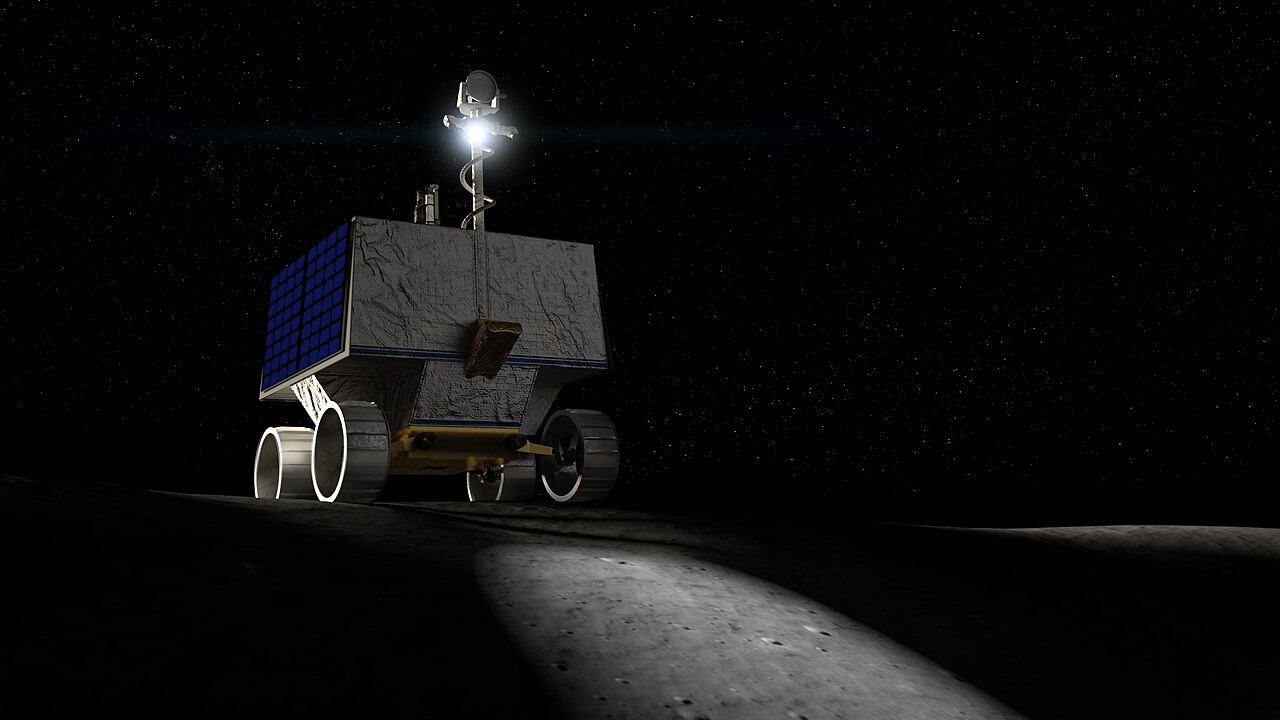
One of the rovers being prepared is VIPER, which NASA says has been built and is undergoing testing at Johnson Space Center in Houston. It is scheduled to launch in 2027 to explore permanently shadowed craters, search for water and other resources, and analyze lunar surface materials. Another rover, PROMISE, is nuclear-powered and is targeted to launch by the end of 2028 to search for resources both on and below the surface.
A lunar terrain vehicle is also planned to launch toward the south pole by 2028. Astronauts will be able to drive it to reach a wider area and collect geological samples; when no astronauts are present, the vehicle will be operated from Earth. Meanwhile, the MoonFall mission will send a group of thruster-powered drones to map hard-to-reach terrain, helping with the selection of potential Artemis landing sites.
Cold, rugged terrain, and sharp dust
The south pole is not an easy place to live. NASA says temperatures in sunlit areas can exceed 54 degrees Celsius, while the interiors of permanently shadowed craters can reach minus 203 degrees Celsius. Steep slopes, ridges, rocks, and deep craters also make travel difficult. Detailed mapping is therefore needed to choose safe landing sites and routes.
Another threat comes from regolith, the layer of rock fragments and mineral dust covering the Moon’s surface. Without wind and rain to wear them down, these particles have sharp edges that can abrade spacesuits and equipment. The dust can also irritate skin and be harmful if inhaled, so it must be kept out of astronauts’ living spaces.