An educational article with references listed below.
An international team of scientists has developed a method for finding pulsars in NASA data about a million times faster than before. By analyzing 15 years of observations from the Fermi Gamma-ray Space Telescope, they discovered PSR J1622−7204, an isolated pulsar that spins 261 times per second. The findings, published in Physical Review Letters, open up opportunities to identify more objects whose signals are difficult to detect.
Hidden pulses
Pulsars are rapidly spinning neutron stars that sweep beams of radiation through space. Neutron stars are the extremely dense remnants of stars. When their radiation beams cross Earth's line of sight, observers can detect recurring pulses, much like the light from a lighthouse that becomes visible each time its beam points toward us.
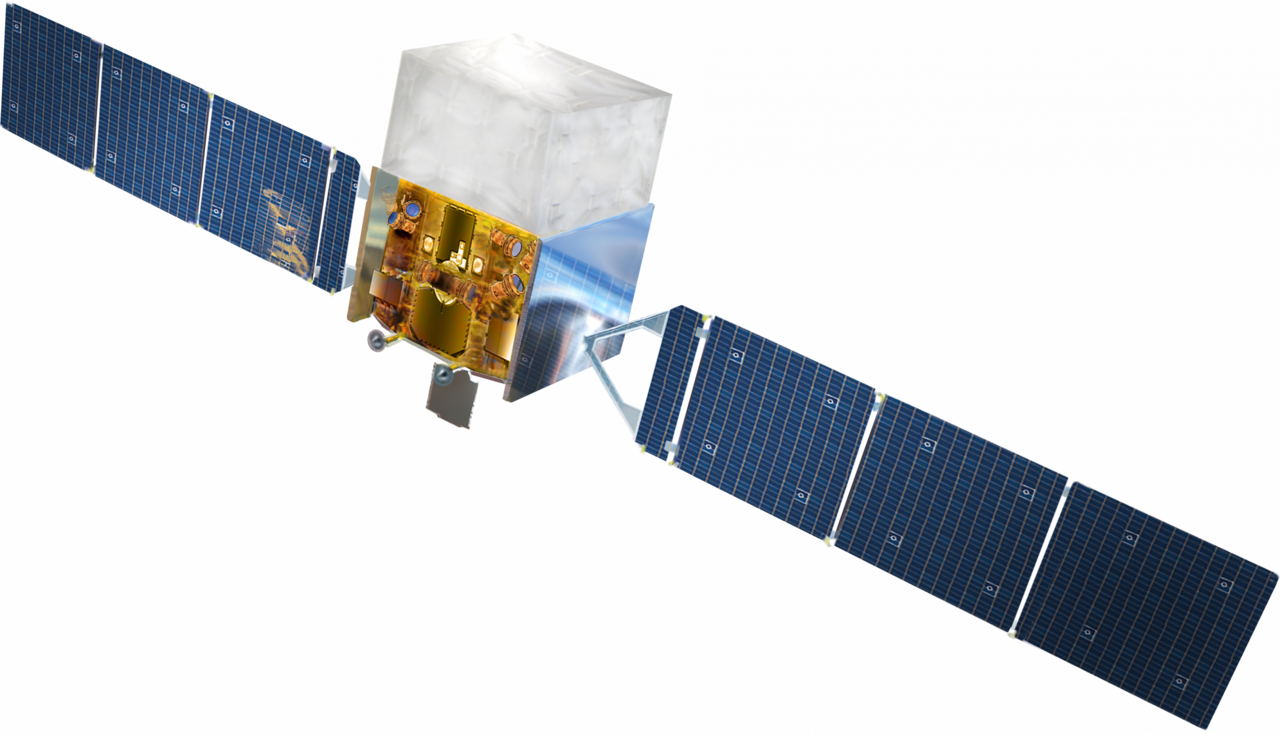
However, these pulses are not easy to identify in gamma-ray observations. Fermi detects only a small number of photons, or particles of light, from a pulsar. These photons are mixed with signals from other sources and background radiation, so researchers cannot simply count each rotation of the star.
The challenge of too many possibilities
To find a pulse pattern, researchers must estimate several things at once: how fast the star spins, how quickly its rotation slows, and its exact position in the sky. Each estimate has many possible values. Checking every combination requires an enormous amount of computation.
Previous approaches divided Fermi data into smaller segments and used computing power donated by volunteers. Even so, searching for a single pulsar typically required the equivalent of hundreds of years of computation on one processor. In the case of PSR J1622−7204, the best previous method failed to find it despite using the equivalent of 600 years of computation on a standard processor.
Borrowing mathematics from cryptography
Dotan Gazith and Barak Zackay of the Weizmann Institute of Science in Israel developed a way to turn the pulsar search into a geometry problem. The challenge becomes finding the shortest vector in a high-dimensional lattice. A lattice can be pictured as a regular arrangement of points, while a vector describes a direction and length within that arrangement.
The approach uses algorithms developed in cryptography research to test encryption systems designed to withstand future quantum computers. The astronomers are not breaking codes. They are using mathematical tools from that field to search more efficiently for patterns in astronomical data.
Each run of the algorithm takes about five minutes on a single processor core. The discovery of PSR J1622−7204 itself required a total amount of computation equivalent to about 10 hours on a standard processor. After finding the candidate, the team tested it using the full Fermi dataset included in the study and obtained a signal so strong that it could not be explained by chance.
Opening the way to further discoveries
The next target is pulsars in binary star systems, where a pulsar orbits a companion star. The companion's gravitational influence alters the received signal and makes the search even more complicated. The team hopes to extend the new method with support from volunteer computing through the Einstein@Home program.
The success also demonstrates the importance of open data. Fermi observes the entire sky every three hours in gamma rays, the highest-energy form of light. Free access allows researchers outside the mission team to apply different approaches, while software such as Fermitools helps them prepare the data for analysis. This openness also allows other teams to check the search results.