An educational article with references listed below.
A collage released by NASA shows 49 drill holes in rocks on the surface of Mars, photographed by the Curiosity rover through November 2026. Each hole represents a rock sample collected for further examination. Behind this series of photographs is a sequence of operations linking drilling, imaging, and onboard analysis of rock composition.
Small holes as traces of sample collection
Each hole in the collage measures 16 millimeters, or 0.63 inches, in diameter. Small as they are, the holes serve an important purpose: they mark where rock material was collected for examination. By bringing the photographs together, the collage shows the results of 49 drilling operations in a single view, rather than just one sampling site.
In the study of rocks, surface appearance and composition are two different kinds of information. Photographs show visible features, while sample examination helps reveal what the rocks are made of. Images of drill holes are therefore not the final results of the entire investigation. They document part of the process of obtaining material that Curiosity's instruments can analyze.
From the end of the arm to the rover's interior
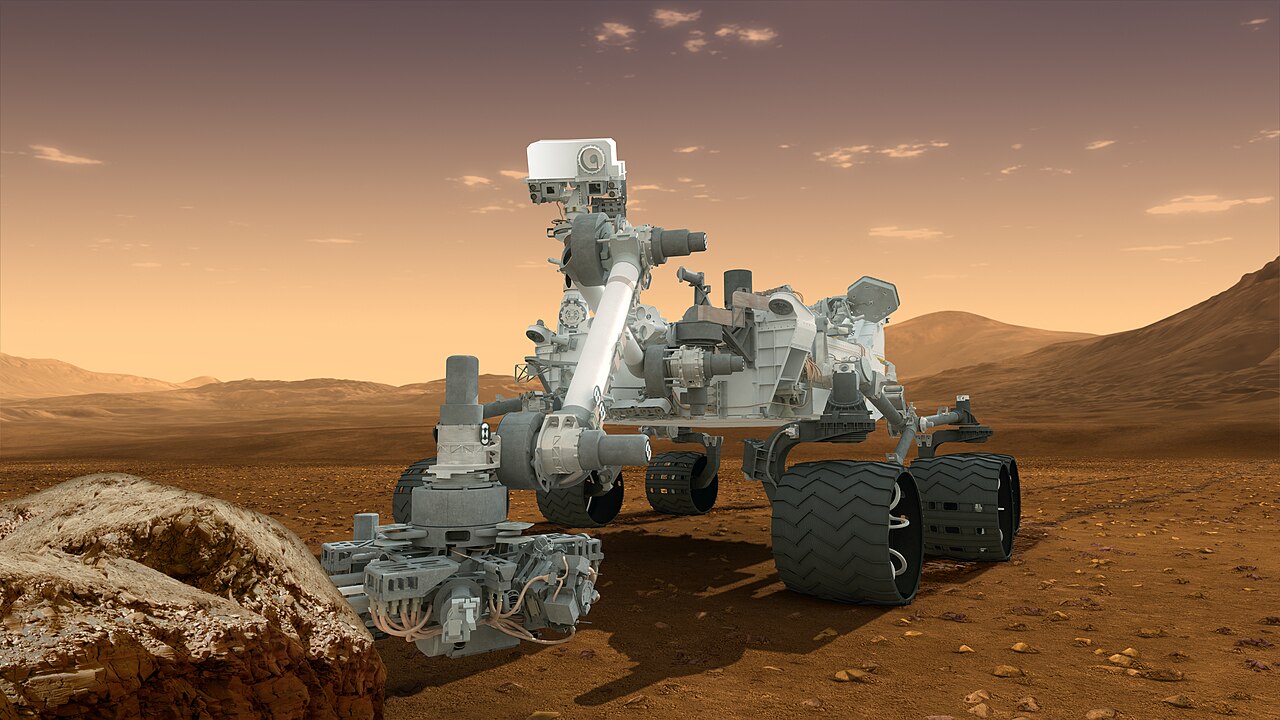
Curiosity's drill is located at the end of its robotic arm. The device pulverizes rock into powder, and the samples are then delivered to instruments inside the rover's body. Those instruments analyze the samples' composition. In this way, rock that was once part of the Martian surface can be examined as material collected by the rover itself.
Put simply, compositional analysis aims to determine what a material is made of. This differs from merely assessing color or shape in a photograph. Two rocks that look similar do not necessarily have the same composition. Conversely, a difference in appearance alone is not enough to establish a difference in composition. This is why sampling complements camera observations.
The camera documenting the holes and the collage's limits
The drill-hole photographs were taken using the Mars Hand Lens Imager, abbreviated MAHLI. Like the drill, this camera is located at the end of Curiosity's robotic arm. Its role in this collage is to record the holes left by sample collection. Photographs and instrument analyses complement each other, but they do not convey exactly the same kind of information.
The collage does not, on its own, explain the analytical results for each sample. Nor is the number of holes a direct measure of the number of discoveries. What it shows is 49 traces of rock sampling, each associated with material collected by Curiosity. Understanding the scientific significance of each sample still requires the results of its compositional analysis.
Curiosity was built by NASA's Jet Propulsion Laboratory, which is managed by Caltech in Pasadena, California. JPL leads the mission for NASA's Science Mission Directorate as part of the Mars Exploration Program. The MAHLI camera was made by Malin Space Science Systems in San Diego.