An educational article with references listed below.
Stellar birthplaces are usually introduced through colorful images. Now, a new album from NASA’s Chandra X-ray Observatory offers another way to explore them: through sound. Four sonifications transform data about forming stars and their surroundings, both within our galaxy and beyond.
Sound as a translation of data
Sonification is not a recording of star sounds captured by a microphone. In this process, observational information is mapped to elements of sound, such as pitch, volume, and instrumental timbre. Listeners can follow changes in the data through changes in sound, while images continue to provide a visual representation.
The album combines observations from Chandra with those from other NASA telescopes. X-rays help reveal hot gas and the activity of young stars, while infrared light shows dust and gas in star-forming regions. By studying these places, astronomers can better understand the life cycles of stars, including the Sun.
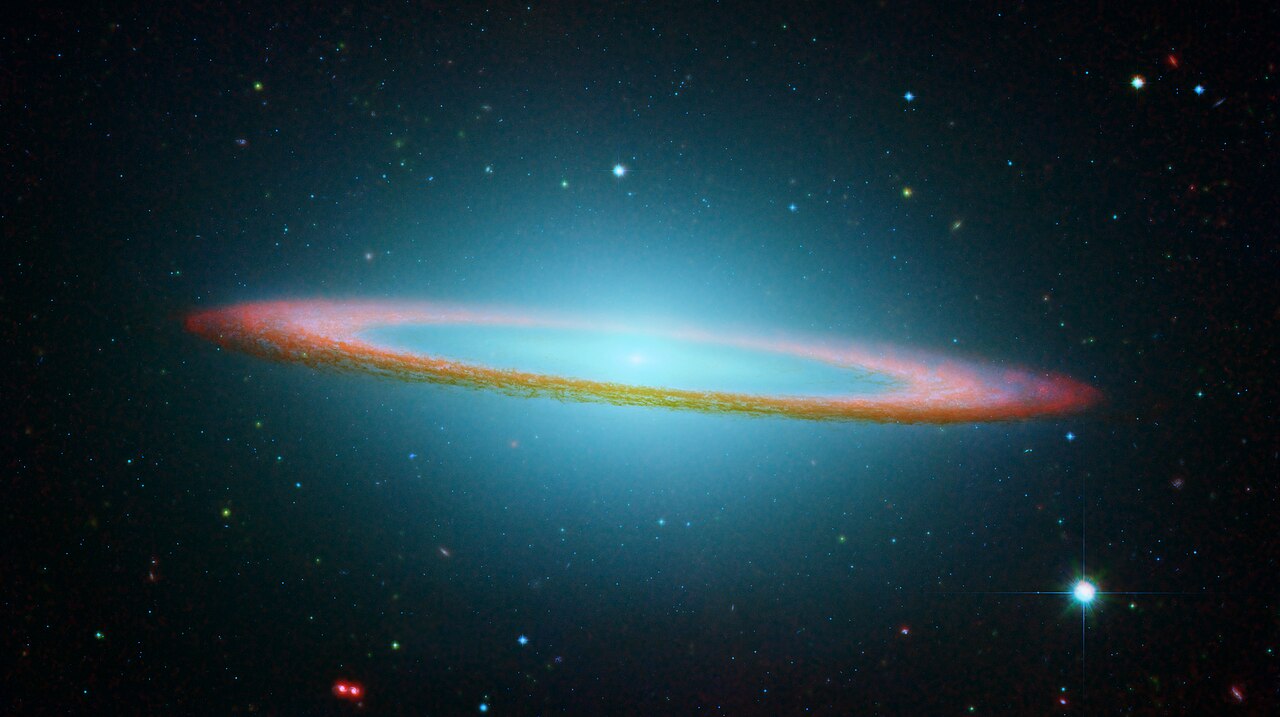
M82, a galaxy with intense star formation
Messier 82, or M82, is called a starburst galaxy because its rate of star formation is tens to hundreds of times higher than the Milky Way’s. This burst of star formation may be linked to a past collision between galaxies. Chandra sees enormous outflows of hot gas resulting from star-forming activity, including massive young stars that quickly end their lives in explosions.
The M82 sonification combines Chandra X-ray data, Hubble visible-light data, and infrared data from James Webb and Spitzer. A radar-like scan produces louder sounds for brighter sources. X-rays receive the highest range of pitches, infrared light becomes low drones and plucked sounds, and visible light is translated into a variety of notes and musical textures.
Orion and its active young stars
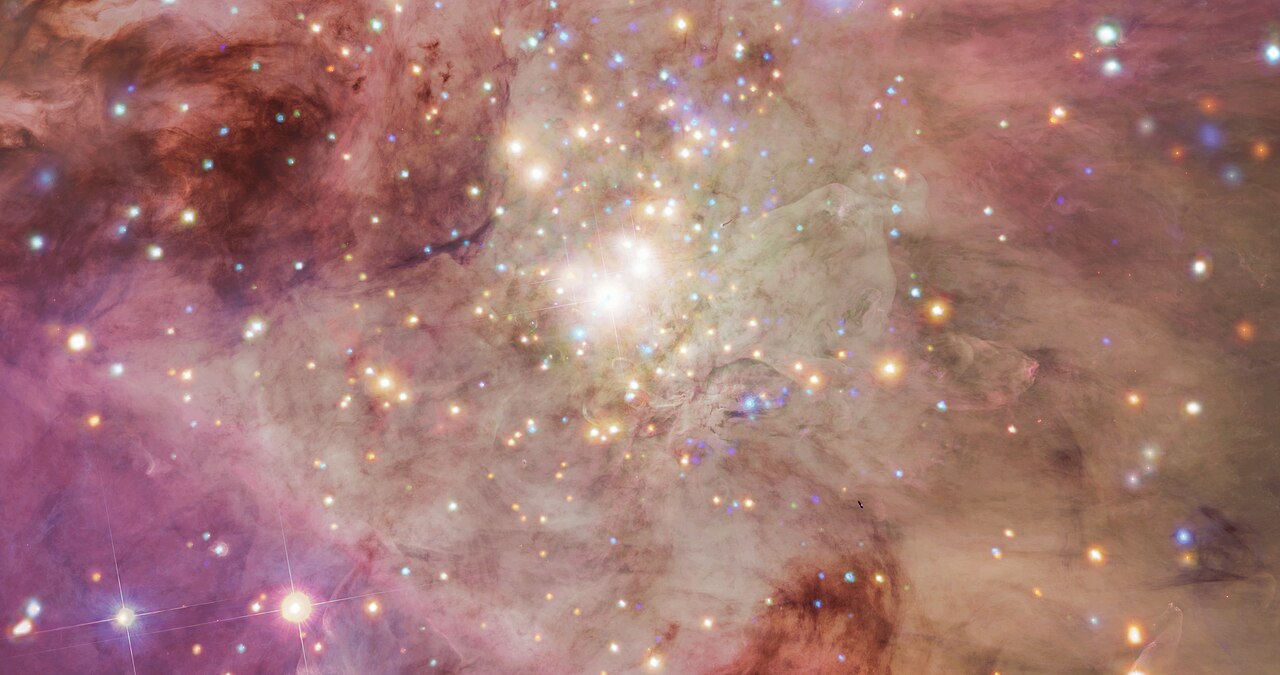
The Orion Nebula is one of the closest and busiest star-forming regions to Earth. Under dark skies, it can be seen with a small telescope, just below the belt of the constellation Orion. Chandra detects more than a thousand highly energetic, active stars in the early stages of their lives in this region.
In the sonification, these stars are heard as twinkling sounds, while diffuse X-ray emission is represented by pure, high-pitched tones. Webb’s infrared observations reveal gas and dust, the material from which new stars form. These data are translated into lower notes, distorted string instrument sounds, and a digital harp.
Carina’s strings and Rho Ophiuchi’s pause
Part of the Carina Nebula is nicknamed the Cosmic Cliffs because of its cliff-like appearance in Webb’s infrared observations. Chandra sees through obscuring dust and gas to detect newborn stars. In the sonification, each star is assigned a short string sound, while the diffuse X-ray glow is represented by longer string tones. The nebula’s structure in the Webb data becomes a continuous sound, interspersed with instrumental sounds marking stars and ridges.
In the Rho Ophiuchi star-forming cloud, Chandra reveals very young stars undergoing powerful flares and producing X-rays. Its data become high-pitched, glass-like chimes, while clouds in Webb’s infrared image are assigned different tones and stars are heard as metallic plucks. There is a pause in the middle of the composition because a dark dust cloud emits very little light. That pause reflects the nature of the data rather than indicating that the region is empty.